Challenge
Manual review made inconsistent referrals difficult to scan and compare quickly.
A clinical decision-support concept that helps triage nurses prioritize referrals, inspect the evidence behind an AI recommendation, and retain final authority.
Triagen brings the referral queue, AI-supported triage pathway, clinical evidence, and nurse actions into one workspace. It was designed as a team project for a healthcare customer-experience course.
Manual review made inconsistent referrals difficult to scan and compare quickly.
Make every recommendation traceable without taking the decision away from the nurse.
UX research, workflow framing, interaction design, and high-fidelity prototyping.
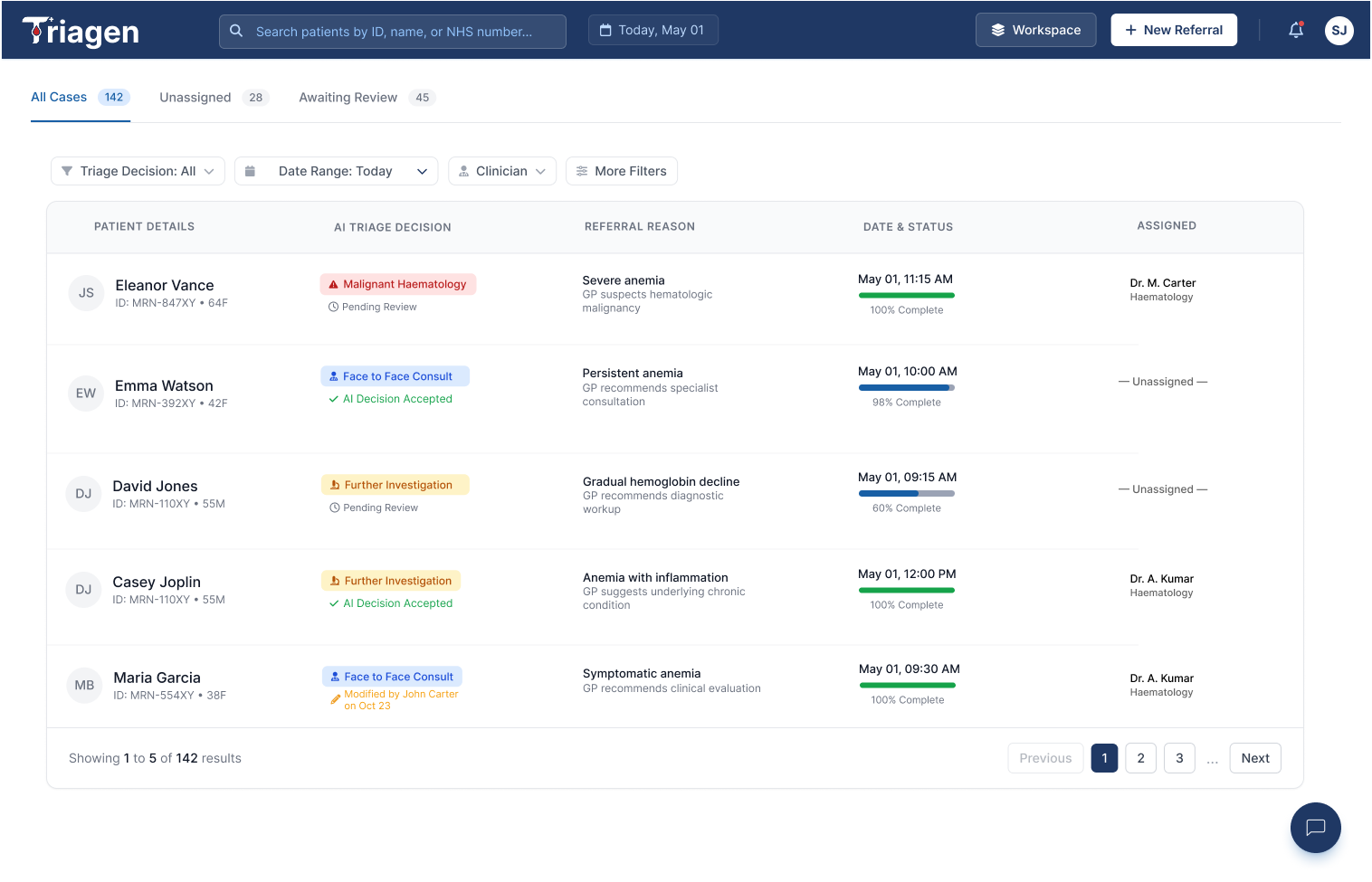
A nurse had to read the letter, find the relevant lab values, decide what mattered, and then assign urgency. The information was available, but it was scattered across the case with no shared interface to guide the review.
The interface could suggest urgency and explain why, but accepting or changing that recommendation always stayed with the nurse.
We combined a literature review, stakeholder mapping, low-fidelity prototyping, and feedback from domain experts. Three practical requirements shaped the final direction.
A summary alone was not enough. Reviewers needed the clinical factors and source information behind a recommendation.
Accept and Modify actions needed to be explicit, documented, and clearly owned by the nurse.
Domain experts wanted a way to query the case without searching through the full referral again.
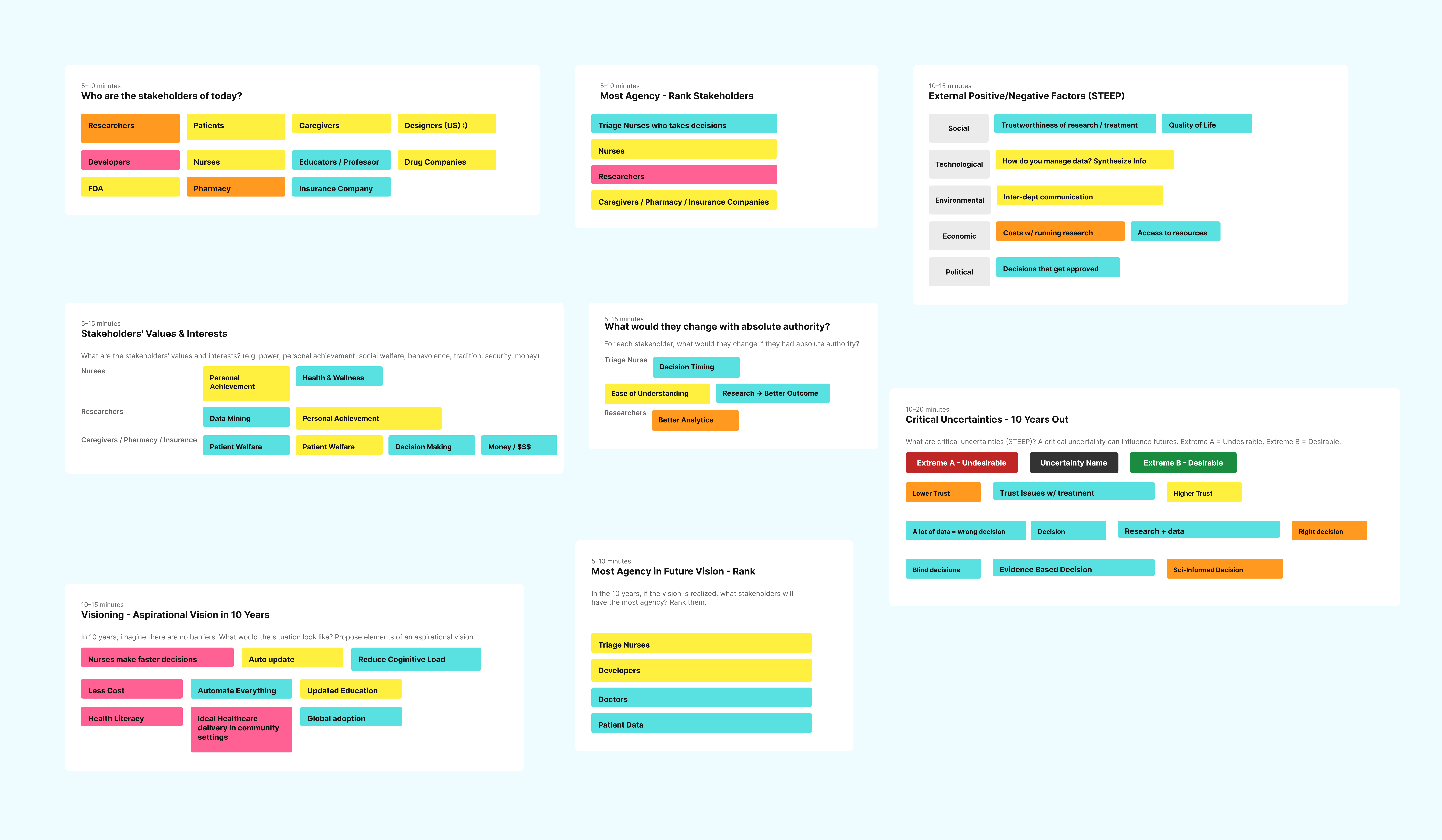
The early concepts tested two core moments: finding the cases that need attention and understanding why a case was flagged. Expert feedback then helped us make the nurse's authority more explicit.
The first concept focused on helping nurses see which referrals needed attention first.
A summary was not enough. Reviewers needed the clinical factors and source data behind every recommendation.
Accept and Modify became primary actions, making it clear that the nurse—not the AI—owned the decision.
Recommendations, changes, notes, and supporting evidence came together in the case history.
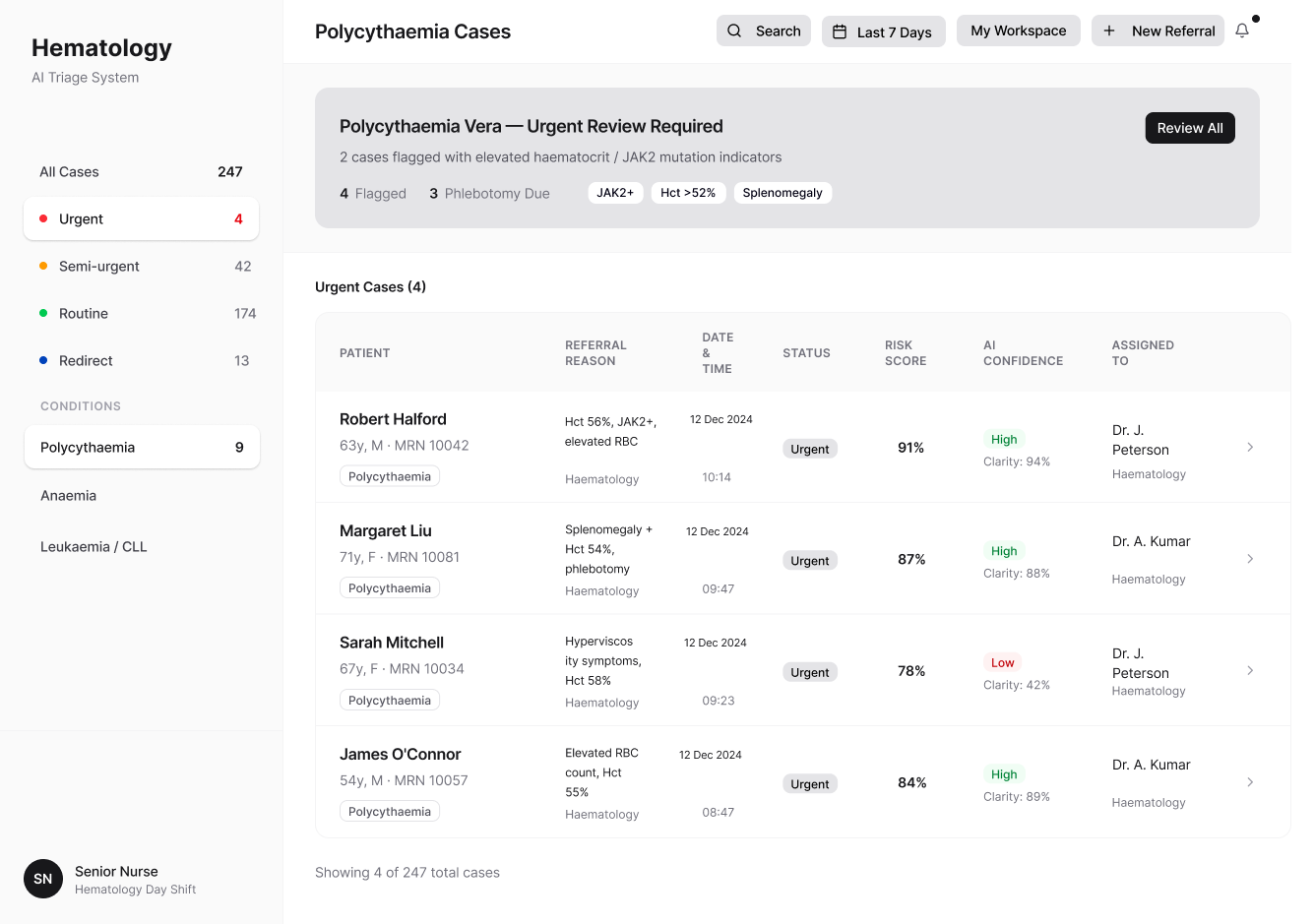
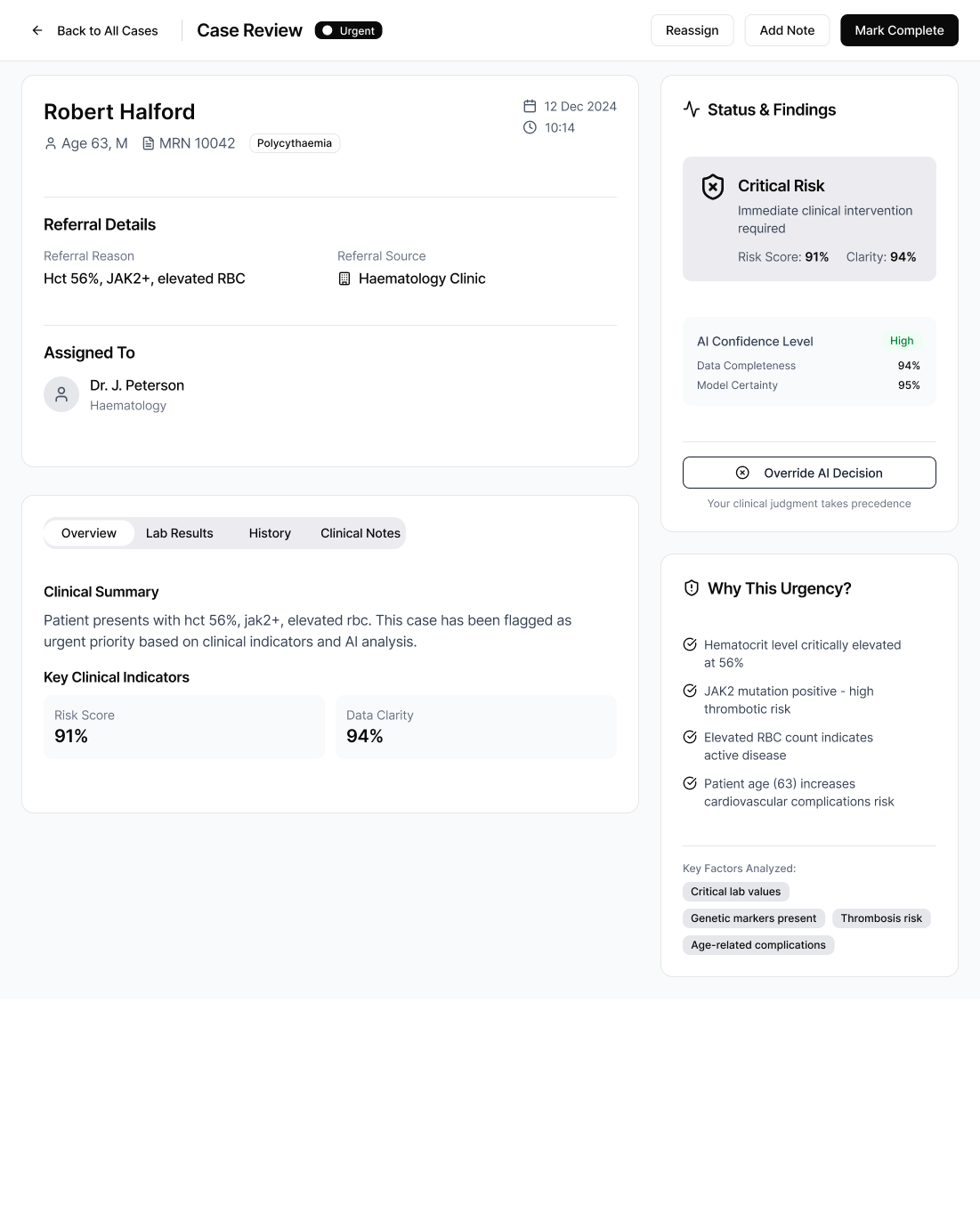
Triagen turns unstructured referral information into a reviewable case workspace. The recommendation is visible, but it never stands alone.
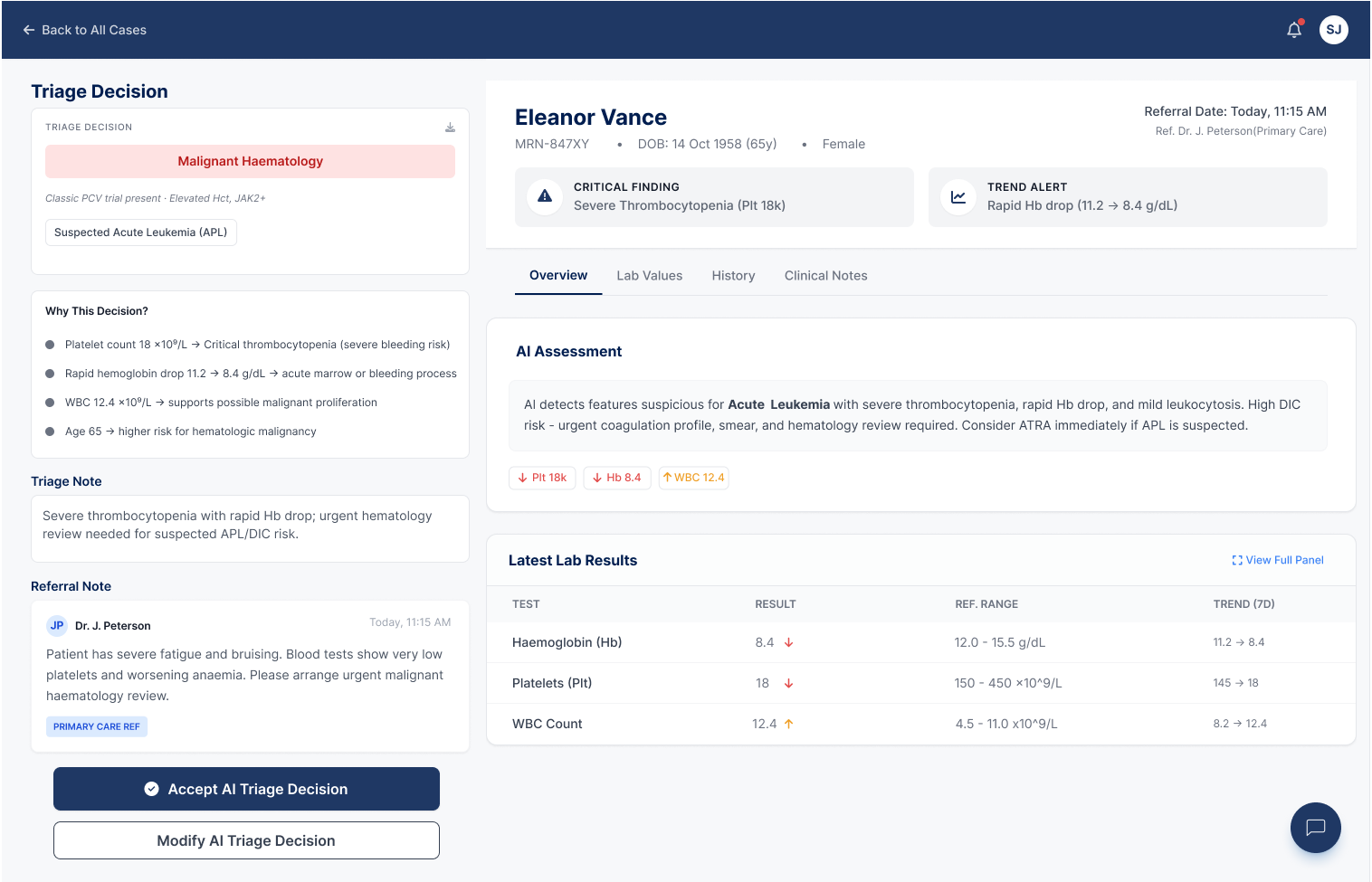
Supporting information is organized around the review task, so nurses can move from recommendation to verification without losing context.
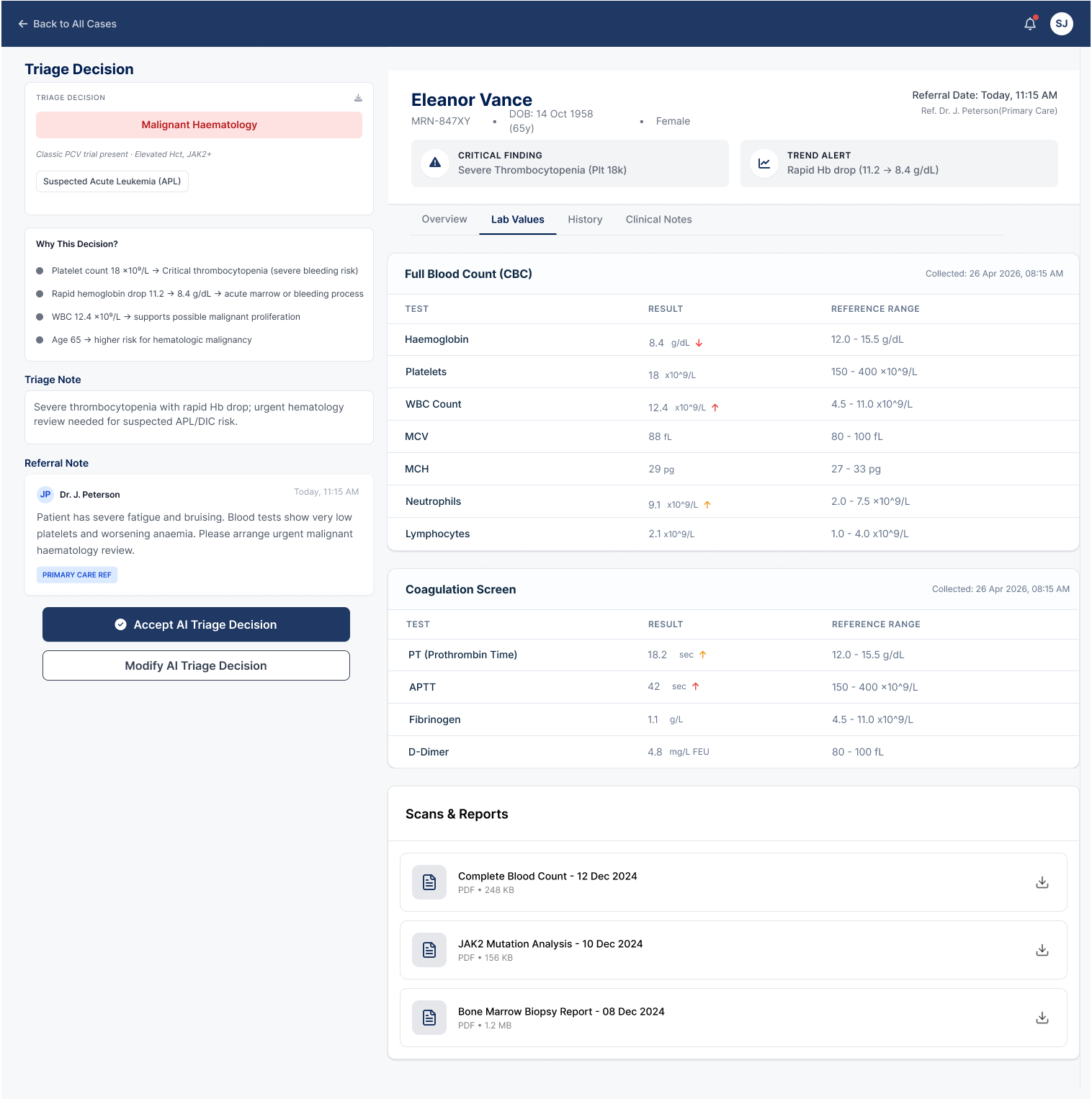
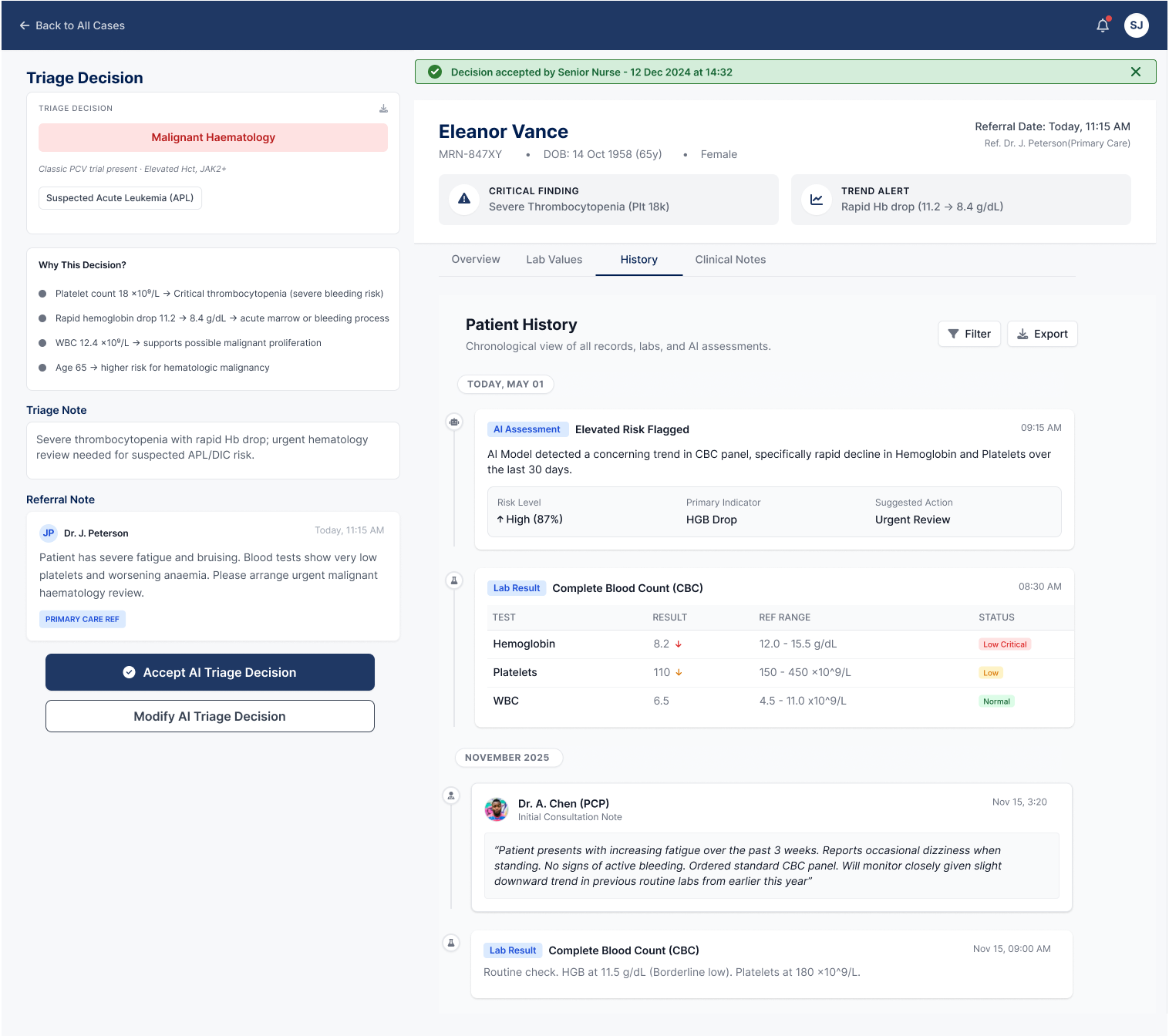
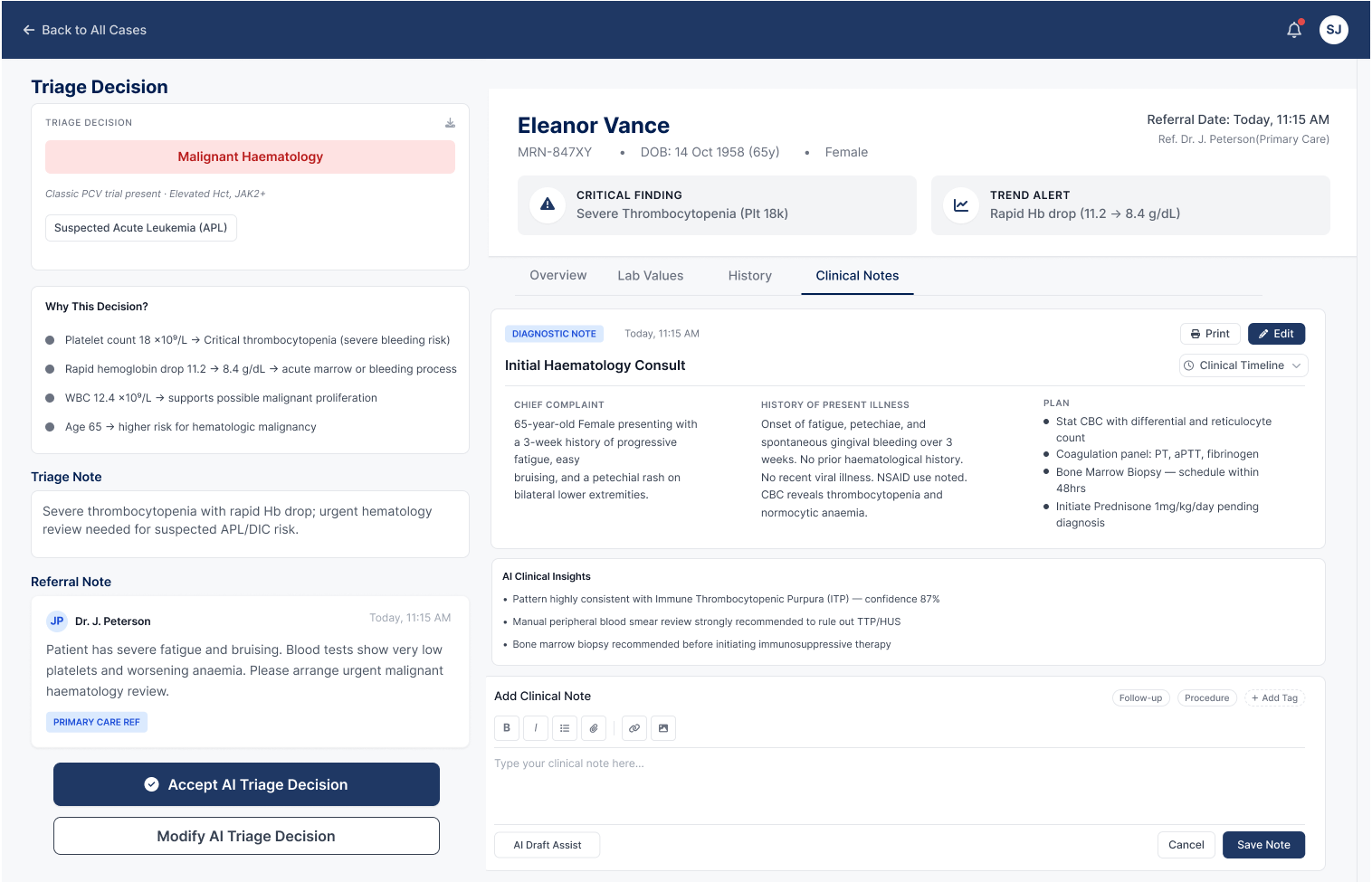
Design intent; clinical impact has not yet been measured.
Designing Triagen changed how I think about AI in clinical workflows. A useful system cannot simply produce an answer. It must show its reasoning, make uncertainty visible, and leave room for the clinician to disagree.